Hans Leutenegger SA
A Swiss job portal: three languages, two audiences and a search engine that has to be instant.
- Year
- 2026
- Design & build
- 6 weeks
- Stack
- Next.js · React · Tailwind · Vercel
- Information architecture
- Design
- Development
- Multilingual
- SEO
Demo version put online by Kayzen Web at a Vercel address; the final domain belongs to the client.

- languages, three site trees
- 3
- year founded
- 1965
- costed optimisation jobs
- 2
What needed solving.
The background
Hans Leutenegger SA is a Swiss industrial recruitment agency founded in 1965: temporary and permanent placements in industry, construction and engineering.
The constraint
Three audiences and three languages. Candidates want a job near home, in their trade, right now. Companies want a recruitment partner. And Switzerland demands multilingualism — German, French, Italian — not as an option but as a condition of existence.
The response
The job search engine becomes the home page: filters by region and trade, instant results, no page reload. The employers' area is a parallel, fully fledged entry point. Each language has its own real site tree, with its own URLs and hreflang.
The scores recorded at delivery.
Lighthouse scores for the live site. We publish them as they are: when one is low, its cause and the plan to fix it are set out below rather than glossed over.
Every design choice, and the reason for it.
Search as the home page
Region and trade filters on the first screen, results below the fold. A candidate who has to navigate before they can search is a candidate lost.
Speculative applications always visible
A large share of placements do not come from a published vacancy. The speculative application is a top-level path, not a footnote.
Two entry points, openly separated
Candidates and employers have opposite needs. The split is explicit from the header onwards, in all three languages.
Project palette
Swiss red
#B21E2A
Identity
Industrial grey
#4A5158
Structure
White
#FFFFFF
Background
Ink
#1B1E22
Text
Type system
Display
Inter 700
Body text
Inter 400
A single family for three languages: German produces long words, Italian short lines. A family with a wide character set and good hyphenation avoids three different layouts.
What's under the bonnet.
- Next.js
- React
- Tailwind
- Vercel
Instant client-side search
Filtering happens without reloading the page. On a jobs portal, every round trip to the server is paid for in abandoned searches.
Three real site trees
/de/, /fr/, /it/ with reciprocal hreflang and clean canonicals. A client-side switch would have left only one language indexed.
Two identified jobs
62 for performance and 92 for SEO. The first comes from loading every vacancy on first render — server-side pagination is the chosen fix. The second comes from missing descriptions on some trade pages. Both are costed.
How the site makes itself findable.
One page per trade and per region
“Emploi soudeur Suisse romande” (welder jobs in French-speaking Switzerland), “Stellen Elektriker Bern”. Crossing trade × region is the foundation of a jobs portal's search visibility.
JobPosting markup
Each vacancy carries its type, location, contract and validity date. That is what makes it eligible for display in job search results.
What was delivered.
- Home — job search
- Jobs by trade
- Jobs by region
- Speculative application
- Employers' area
- The agency since 1965
How the project unfolded.
Architecture
Search on the home page, two entry points, three languages.
Design
Instant filters, speculative applications at the top level.
Development
Client-side filtering, multilingual site trees, JobPosting.
Next
Server-side pagination of vacancies, descriptions for trade pages.
What we are often asked.
More of our work
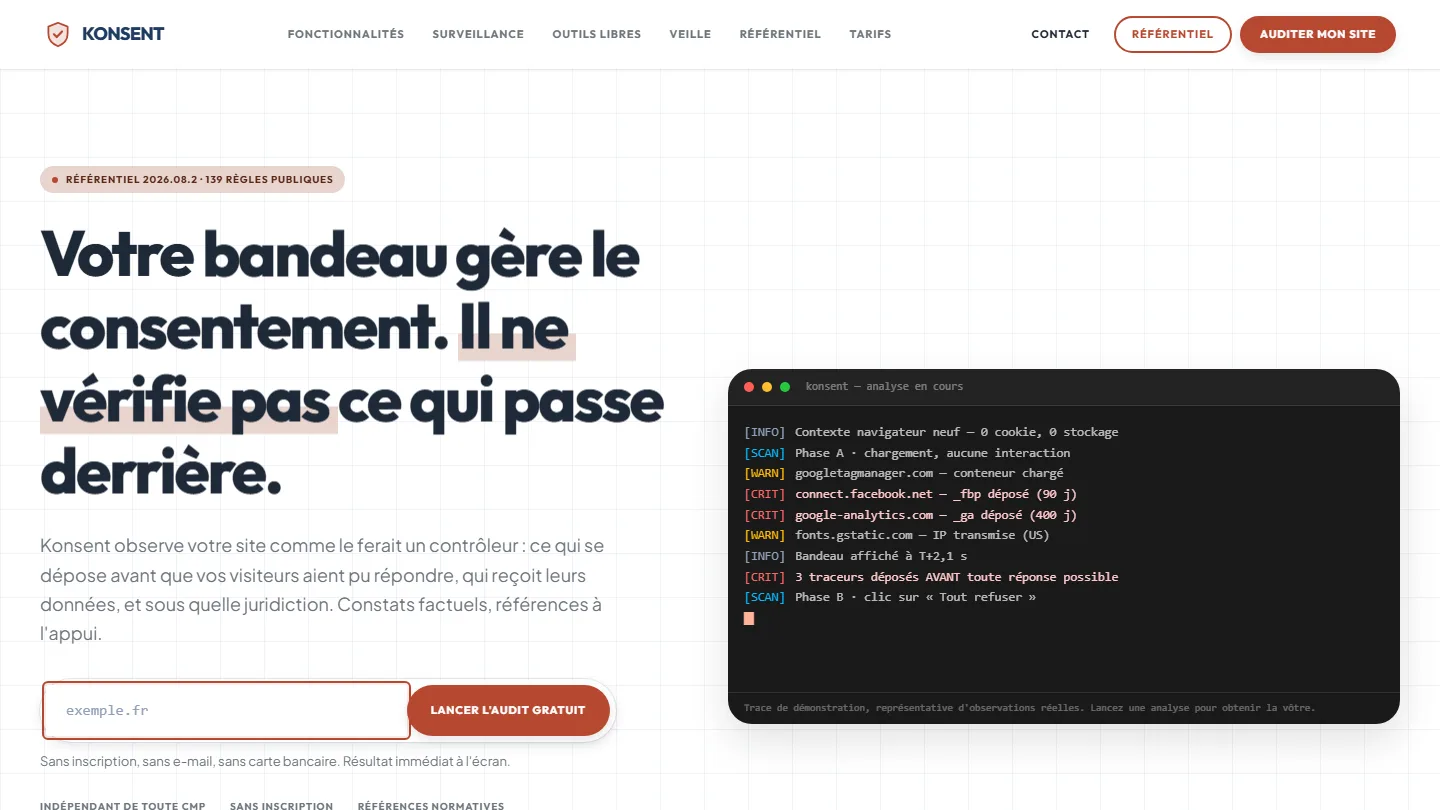 GDPR compliance & SaaS
Konsent by Kayzen
A banner vendor that audits banners is both judge and party: independence was the product.
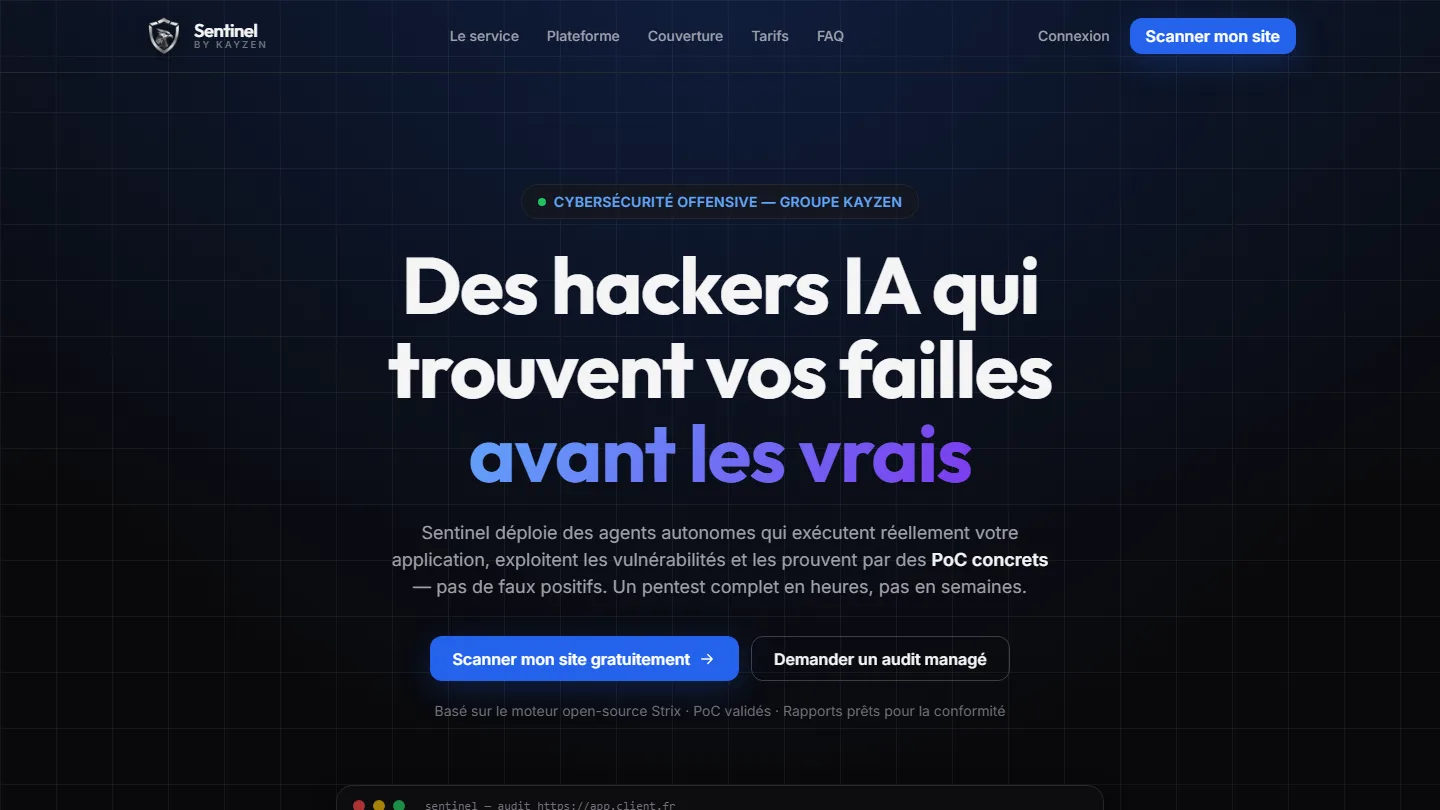 Offensive cybersecurity & SaaS
Sentinel by Kayzen
Selling a security product to engineers: every claim had to be demonstrable.
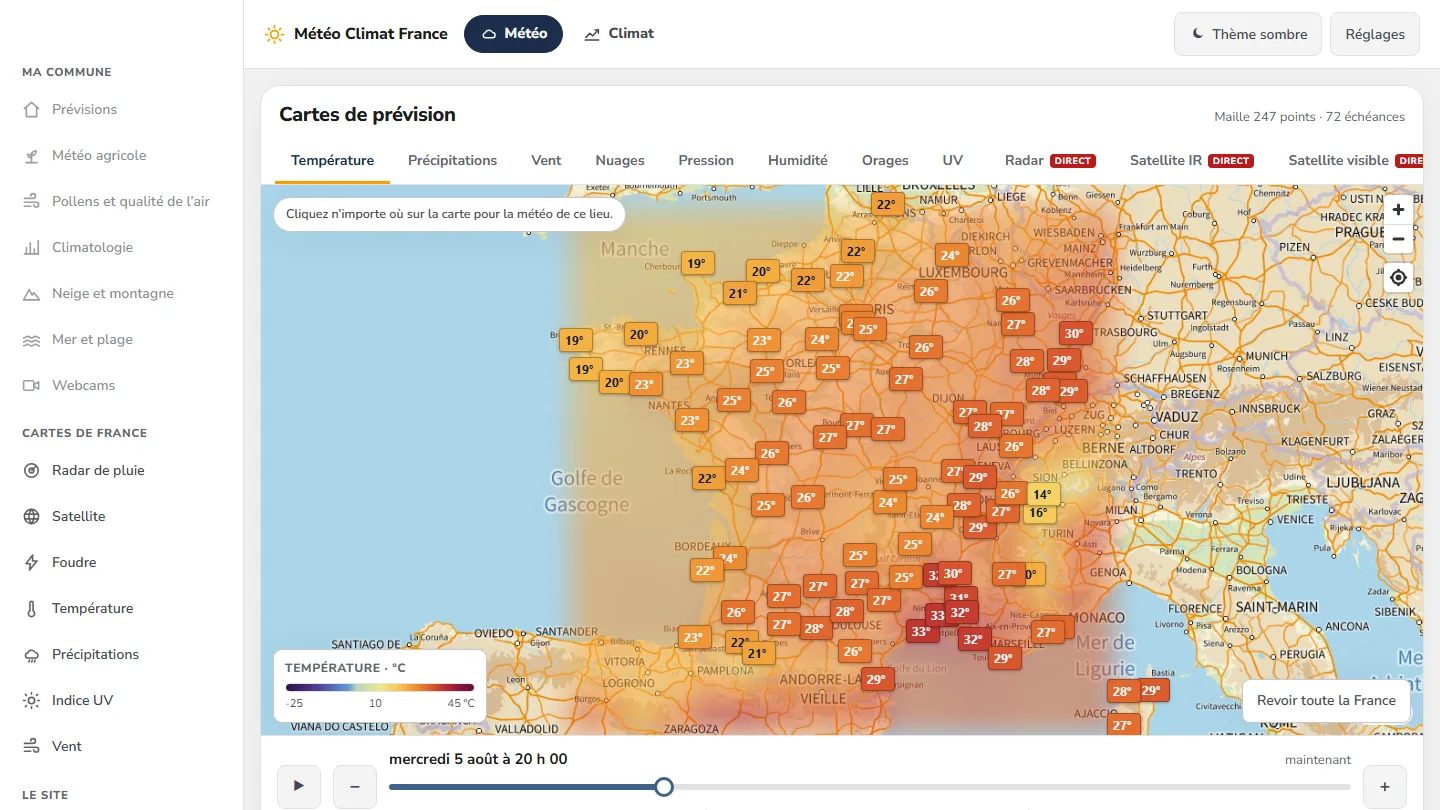 Data & weather service
Météo Climat France
358 indexable pages, a map animated over 72 time steps — and not a single line of framework.


The same high standards, for your website.
A free audit of your current site, a quote within 24 hours and written reasoning — like the case study you have just read. Pay in three interest-free instalments; local funding schemes checked before you sign.