Nexus SEO
Thirty seconds to convince: the free audit had to deliver its value before sign-up.
- Year
- 2026
- Design & build
- 8 weeks
- Stack
- React · TypeScript · Supabase · Tailwind · Vercel
- Product design
- Interface design
- Development
- Database
- SEO

- to run the diagnosis
- 30 s
- the site's Lighthouse SEO score
- 100/100
- sign-ups required to run an audit
- 0
What needed solving.
The background
Nexus is Kayzen Web's SEO audit platform, built for search in the age of generative engines: beyond classic SEO, it measures GEO, AEO and LLMO visibility — in other words, what AI assistants see and cite from a website.
The constraint
The SEO tools market is saturated and its standards are set: mandatory sign-up, limited trial, locked report. Standing out meant reversing that contract — and therefore absorbing the cost of scans run by visitors who will never sign up.
The response
The audit runs without an account and delivers a complete diagnosis in around thirty seconds. Sign-up is only requested to keep the history and track changes over time. We sell memory, not access. The conversion rate is lower than with a sign-up wall, but the intent of those who do convert is incomparable.
The scores recorded at delivery.
Lighthouse scores for the live site. We publish them as they are: when one is low, its cause and the plan to fix it are set out below rather than glossed over.
Every design choice, and the reason for it.
A single field on the first screen
One URL, one button. The entire home page is built around this single action. Features are described further down, for returning visitors — never before the main action.
The report as the product
The audit report received as much care as the marketing page: issues ranked by impact, actionable wording, corrected code snippets. It is the document users share with their team — so it is the report that sells.
A wait with something to see
During the thirty-second scan, the interface announces the current step (crawling, rendering, structured data, AI citations). A silent progress bar would have produced the same delay with twice as many drop-offs.
Project palette
Night
#0F172A
App background
Indigo
#4F46E5
Primary action
Mint
#10B981
Success, passing score
Amber
#F59E0B
Warning
Type system
Display
Inter 700
Body text
Inter 400
Figures set in tabular-nums in every score table: a changing score must not shift the column.
What's under the bonnet.
- React
- TypeScript
- Supabase
- Tailwind
- Vercel
React + Supabase
Authentication, audit storage and row-level security (RLS) policies on the Supabase side. No account's data can be read by another; the rule is enforced by the database, not by the client.
Scanning offloaded to server functions
Crawling a third-party site cannot be done from the browser (CORS, execution time, security). Scans run in server functions with a maximum timeout and per-IP rate limiting.
Anti-abuse from day one
A free tool with no account is a target. Per-IP limits, a queue, detection of repeated domains: the service stays open without becoming a free crawler for others.
How the site makes itself findable.
The tool is its own argument
The Nexus marketing site scores 100 out of 100 in Lighthouse's SEO audit. It is the first thing a prospect checks, and they would be right to draw conclusions if it failed.
Content on GEO, AEO and LLMO
Three recent concepts, little documented in French, and therefore facing little competition. The explainer pages capture discovery intent and feed AI assistants' answers.
Usable by everyone.
Since June 2025, the European Accessibility Act has required digital accessibility from a large share of online services. We build it in at the design stage rather than retrofitting it.
Results announced
The end of the scan is announced in a live region: without it, a screen reader user is left on a page that, as far as they are concerned, has not changed.
What was delivered.
- Home and express audit
- Audit report
- GEO / AEO / LLMO
- Pricing
- Account and history
How the project unfolded.
Scoping
Choosing a model without a sign-up wall, calculating the cost of execution.
Engine
Crawling, rendering, extraction, scoring.
Interface
Single field, a wait with something to see, a shareable report.
Accounts
Supabase, RLS, history and tracking.
What we are often asked.
More of our work
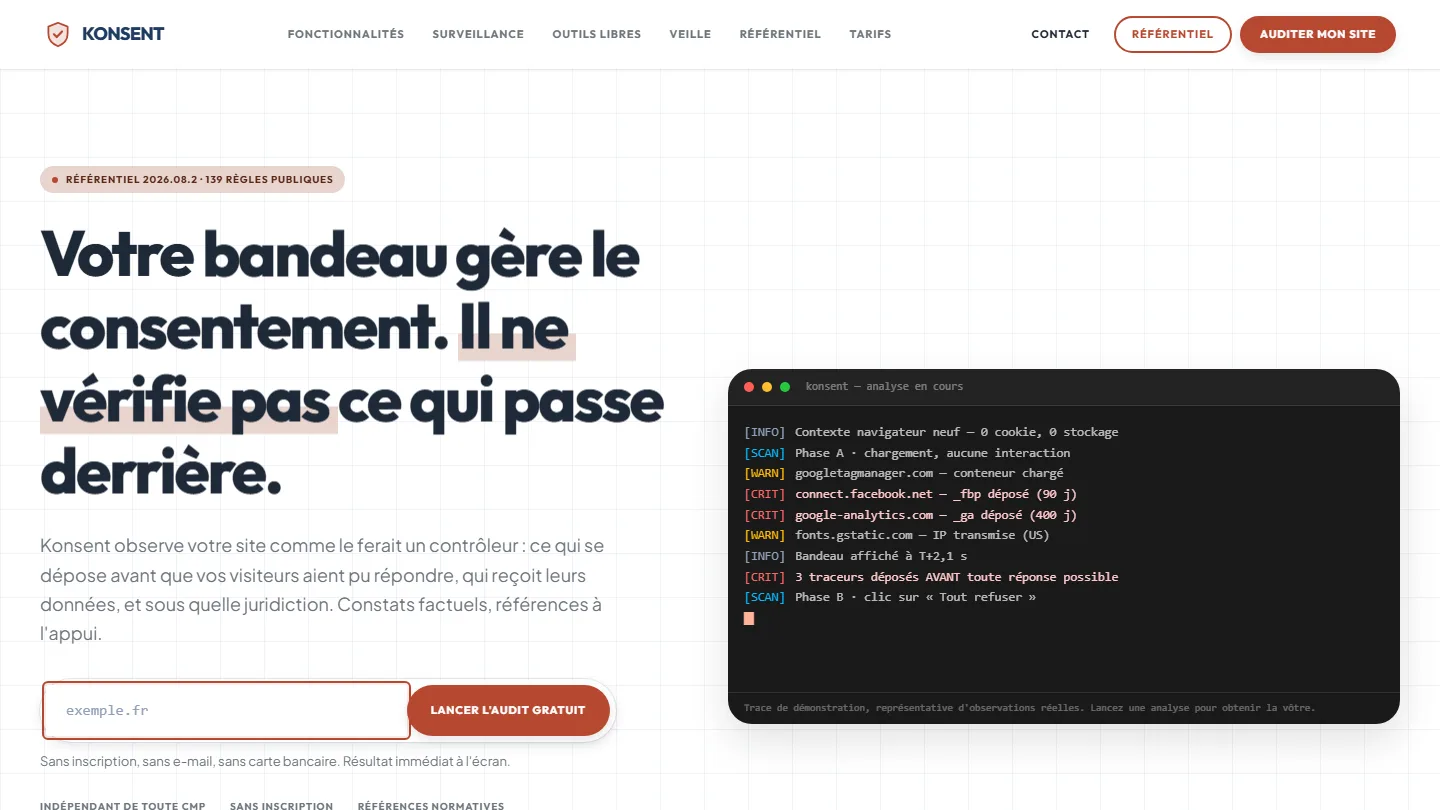 GDPR compliance & SaaS
Konsent by Kayzen
A banner vendor that audits banners is both judge and party: independence was the product.
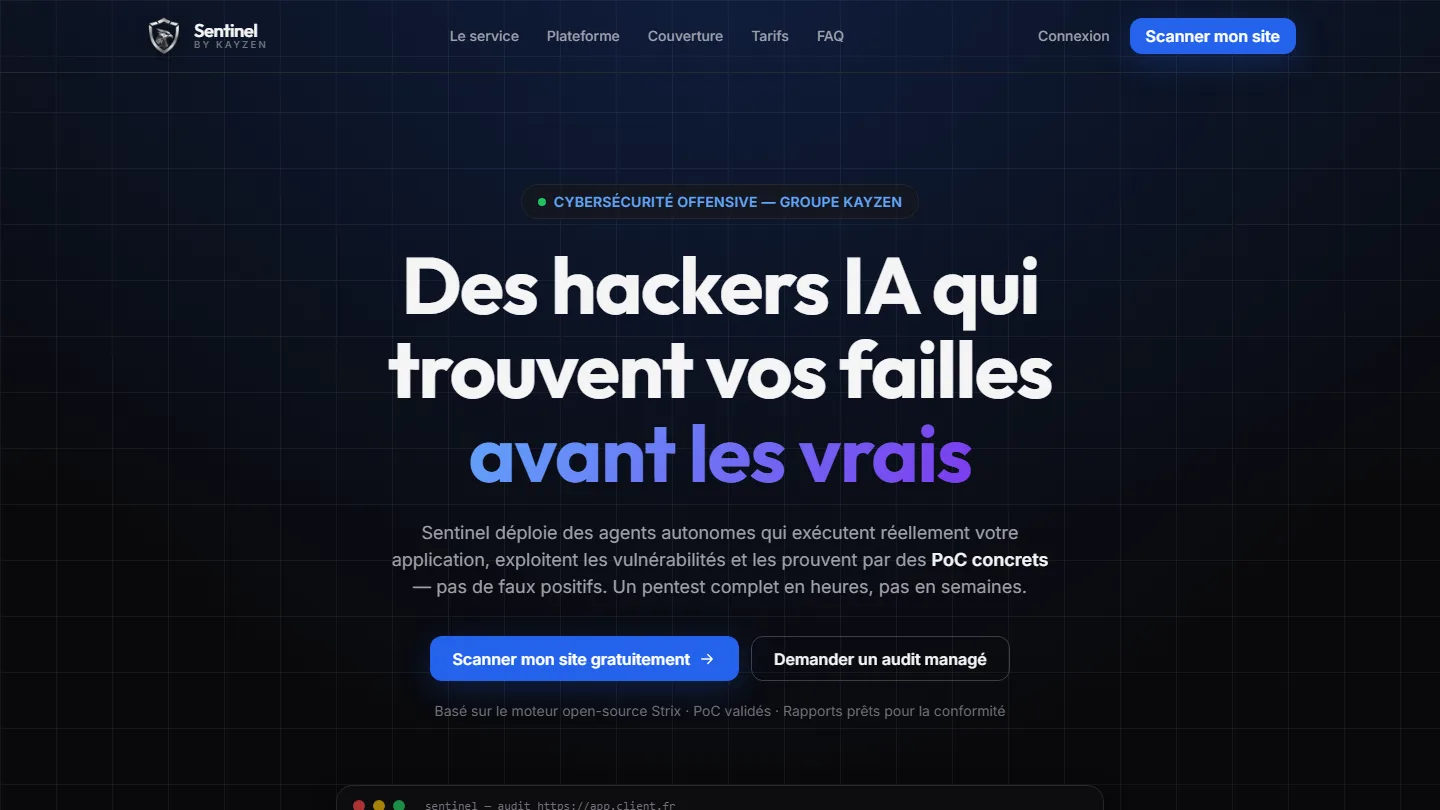 Offensive cybersecurity & SaaS
Sentinel by Kayzen
Selling a security product to engineers: every claim had to be demonstrable.
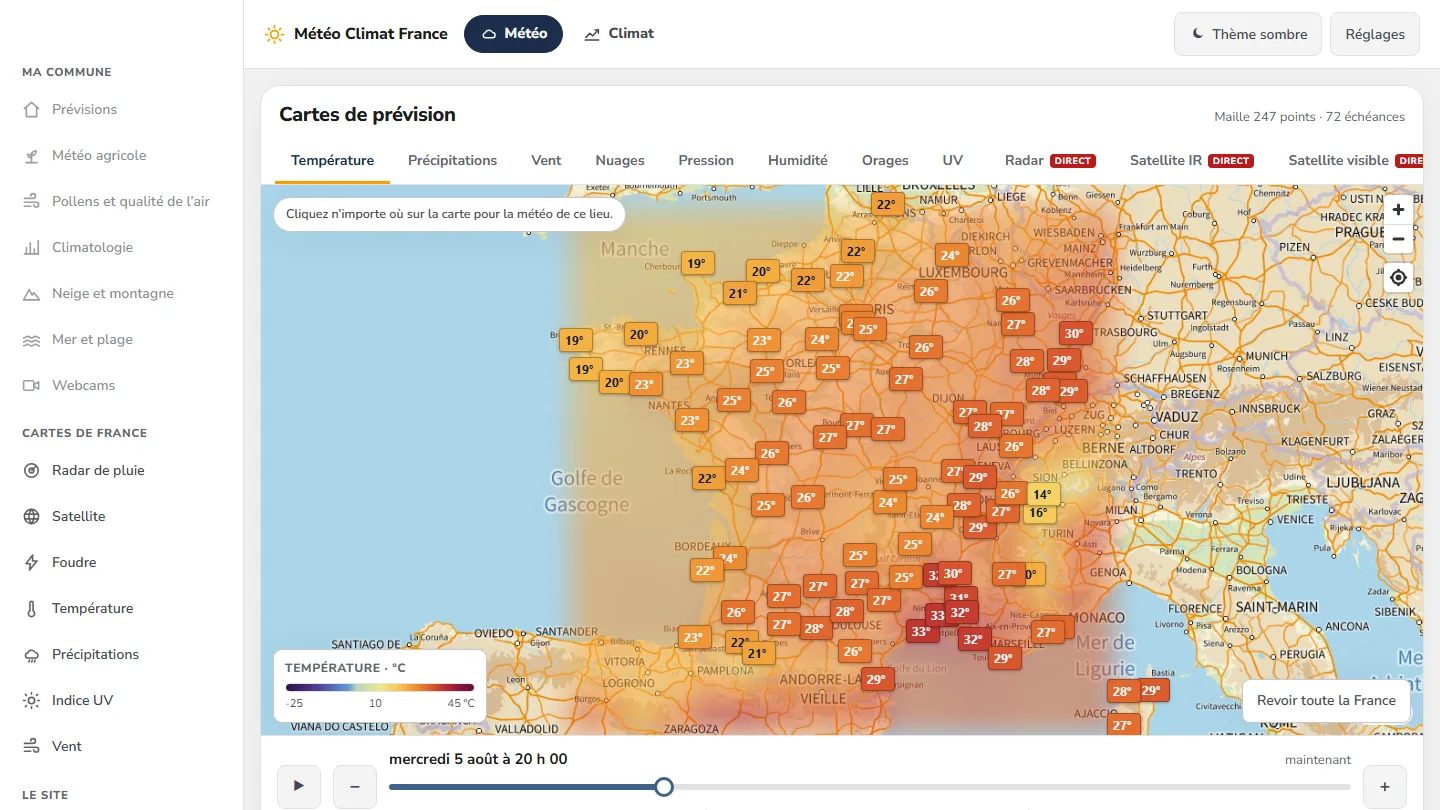 Data & weather service
Météo Climat France
358 indexable pages, a map animated over 72 time steps — and not a single line of framework.


The same high standards, for your website.
A free audit of your current site, a quote within 24 hours and written reasoning — like the case study you have just read. Pay in three interest-free instalments; local funding schemes checked before you sign.